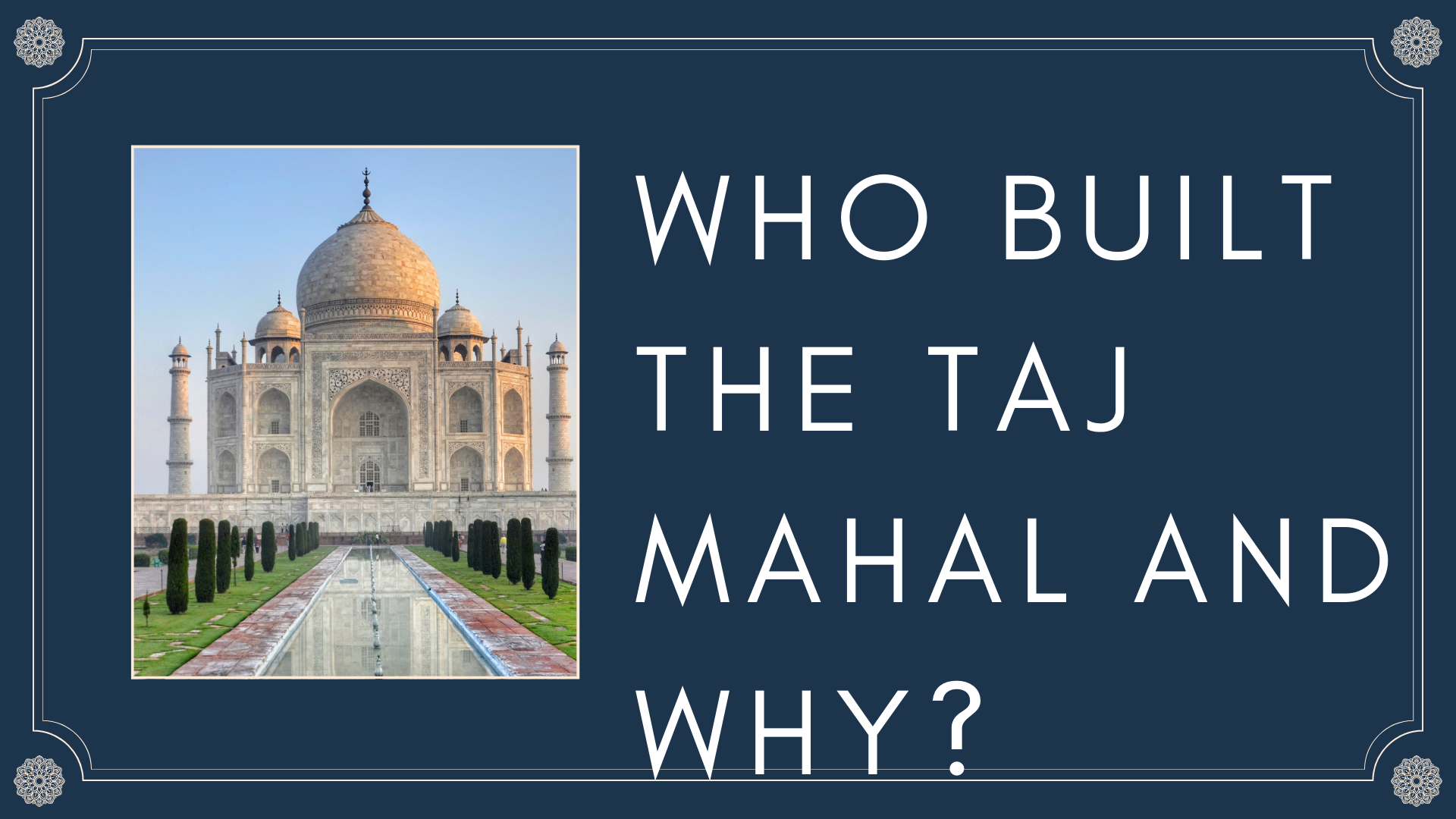
The Taj Mahal was built by the Mughal Emperor Shah Jahan in memory of his beloved wife Mumtaz Mahal. Construction began in 1632 and was completed in 1653.Key Points about the Construction and PurposeBuilder:
The Taj Mahal was commissioned by Shah Jahan, the fifth Mughal Emperor of India.Reason: It was built as a mausoleum for his wife Mumtaz Mahal, who died in 1631 during the birth of their 14th child. Her death deeply affected Shah Jahan, and he wanted to create a grand monument to honor her memory.Architectural Style:
The Taj Mahal is an excellent example of Mughal architecture, which combines elements from Islamic, Persian, Ottoman Turkish, and Indian architectural styles.Designers and Craftsmen:
The principal architect is believed to be Ustad Ahmad Lahauri. Thousands of artisans and craftsmen from across the empire, as well as from Central Asia and Iran, contributed to the construction of the Taj Mahal.Materials:
The mausoleum is made of white marble inlaid with semi-precious stones. The marble was brought from Makrana in Rajasthan, India, while the inlay stones came from various parts of Asia.Complex Layout:
The Taj Mahal complex includes a main gateway, an elaborate garden with a reflecting pool, a mosque, a guest house, and several other mausoleums.Symbolism: The Taj Mahal is not only a monument of love but also an embodiment of Shah Jahan’s vision of a perfect paradise on earth, as it reflects the beauty and grandeur that he associated with his beloved wife.
UNESCO World Heritage Site: Recognized for its outstanding architectural and historical significance, the Taj Mahal was designated a UNESCO World Heritage Site in 1983.The Taj Mahal stands as a testament to the enduring love of Shah Jahan for Mumtaz Mahal and remains one of the most iconic and visited landmarks in the world.